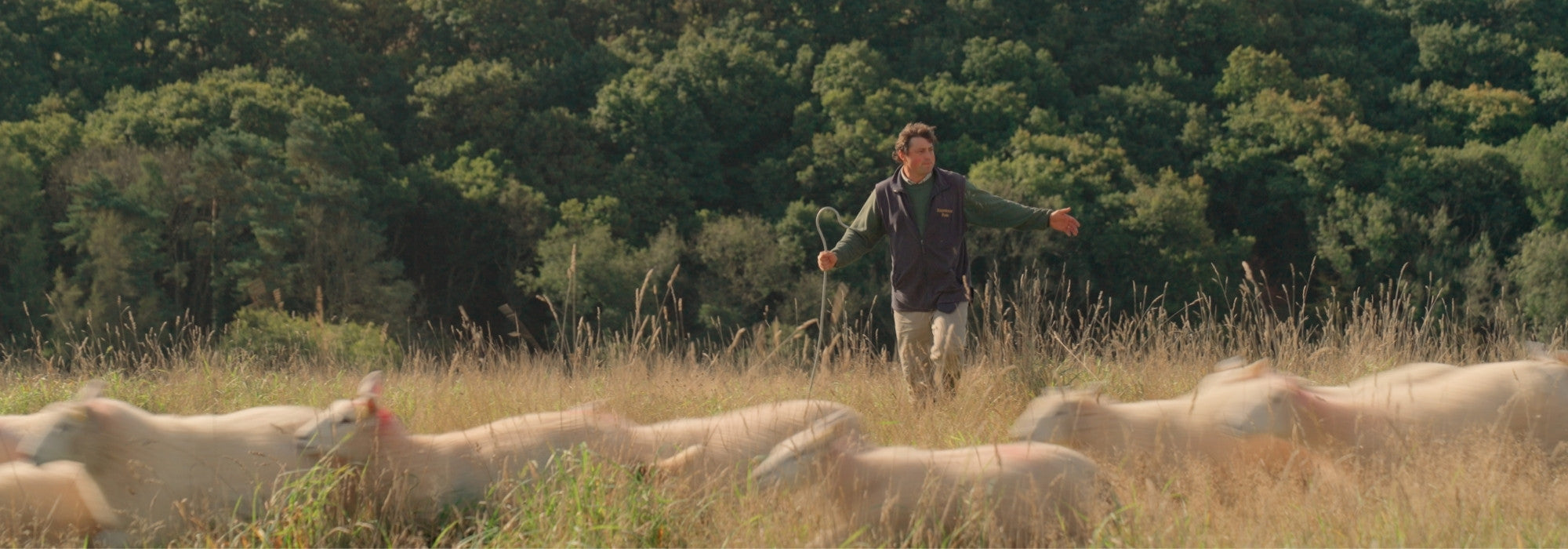
At Essebeare Farm in the rolling hills of North Devon, organic farmer Oliver Walker believes that everything begins with healthy soil. Olly is one of our local wool suppliers, all of whom farm organically, and his flock is Pasture for Life certified too, so we can be confident that every sheep behind the wool in our mattresses, toppers and bedding is very well looked after. Through rotational grazing, native livestock, organic farming and a deep respect for natural systems, he and his family produce 100% grass-fed beef and lamb, while also supplying British wool to Naturalmat. We spoke to Oliver about life on the farm, the journey of wool and why caring for the land benefits us all.

You're quite new to farming. Could you tell us a little about your journey and how you came to Essebeare Farm?
I'm still a relatively new farmer, having only been farming in my own right for the past decade. Before that, I was fortunate enough to work with some wonderful people in Scotland who mentored me, taught me an enormous amount and helped lay the foundations for everything we do today.
In 2015, I was given the opportunity to take on the management of Essebeare Farm, our family farm in North Devon. The full story is a long and interesting one, but it really begins with my wife's grandfather. He was an inventor from Wiltshire who made his fortune developing milking machines and pioneering systems for milking cows outdoors.
Part of his legacy was a small farm in Devon, which has since become the place we proudly call home.
Today, Essebeare Farm is an organic, Pasture for Life certified, 100% grass-fed livestock farm, where we rear native cattle and sheep using regenerative grazing principles that place soil health, biodiversity and animal welfare at the centre of every decision we make.
One of the most rewarding parts of our journey has been developing our own on-farm organic butchery. It means we can take responsibility for the entire journey, from healthy soil and thriving pasture right through to producing exceptional organic beef and lamb that we sell directly to our customers. That connection between the land, the livestock and the people who enjoy our food is incredibly important to us.

What animals do you keep at Essebeare Farm? Are any more or less challenging to look after than others?
At Essebeare Farm we rear native Ruby Devon and Hereford cattle alongside our flock of Lleyn sheep. They're all managed organically under our Pasture for Life system, meaning every animal is raised on a completely grass-fed diet.
Our cattle are particularly interesting because we haven't followed the trend of selecting ever larger, faster-growing animals. Instead, we've built our herd around native genetics, using pedigree Ruby Devon and Hereford bulls, while also introducing bloodlines from some of the country's most respected Pasture for Life farms.
Our aim isn't to breed the biggest animals, but to breed the most appropriate animals for the landscape they live in.
We want cattle that are naturally hardy, fertile and efficient at converting the grasses and herbs we can realistically grow here in North Devon into exceptional beef. When you look back a century, farmers produced remarkable livestock without relying on imported feeds or synthetic agriculture. We believe there's still much to learn from those traditional genetics.
The sheep, meanwhile, keep us humble! They're endlessly curious and somehow always manage to find the one weakness in a hedge or fence. But grazing cattle and sheep together creates a wonderful balance. Each species grazes differently, helping us improve pasture quality, encourage biodiversity and make better use of the land.
Ultimately, we don't see our livestock as separate enterprises. They're partners in the landscape, each playing an important role in producing nourishing food while restoring the health of our farm.

Could you walk us through the life of your flock, from lambing through to shearing?
A very wise farmer once told me that lambing doesn't begin in April. It begins the moment you turn the rams in with the ewes. I've never forgotten that.
At Essebeare Farm, our breeding season starts each November. Before the rams join the flock, we use teaser rams to synchronise the ewes' cycles, helping to create a compact lambing period where around 80% of our lambs are born within the first few weeks.
Throughout winter the sheep remain outdoors, moving regularly across fresh pasture as part of our rotational grazing system. They're hardy animals, bred for exactly this environment. We provide shelter where it's needed and supplement with home-grown forage during severe weather, but allowing them to express their natural behaviour is an important part of our farming philosophy.
The sheep also become some of our greatest conservation partners.
As they graze through the winter they open up the sward, allowing light to reach the soil and giving the wildflower seeds shed during the previous summer's hay harvest the opportunity to germinate. Their hooves gently work those seeds into the ground, helping restore the species-rich meadows that are such an important part of the North Devon landscape.
As lambing approaches every ewe is scanned so we know whether she's carrying singles, twins or triplets. That allows us to tailor her nutrition according to her needs rather than treating every animal the same.
Our sheep lamb outdoors, mostly without assistance. We intervene only when necessary because we've spent years selecting for resilience, strong maternal instincts and sheep that thrive within our organic, grass-fed system.
Every lambing season teaches us something new.
As farmers we're always observing. Which ewes produce the best milk? Which lambs grow well on grass? Which bloodlines are naturally healthiest? Every year those observations shape the next generation of our flock.
By late spring the herbal leys and species-rich pastures are bursting into life. Lambs begin nibbling grass within their first week before gradually becoming confident grazers alongside their mothers.
June brings shearing, which is a day we always look forward to.
We work with a championship shearer whose calm skill turns what many people imagine to be a stressful process into something incredibly smooth and respectful. Good shearing isn't about wrestling a sheep; it's about balance, rhythm and understanding how the animal moves. Done well, the sheep remain remarkably relaxed and seem genuinely relieved to lose a heavy winter fleece.
Every fleece is then carefully packed and collected by Naturalmat, where it begins an entirely new journey.
Knowing that the wool grown on our farm stays here in the South West to become beautiful natural mattresses is enormously satisfying. It's a wonderful example of the circular economy in action - supporting British farming, British manufacturing and the continued use of one of nature's most remarkable fibres.

What does being certified organic involve in practice?
For us, being certified organic isn't simply about avoiding artificial fertilisers or pesticides. It's about committing to a whole philosophy of farming that is independently inspected and held to a recognised standard.
At Essebeare Farm we're both certified organic and Pasture for Life certified, and for us those two standards complement one another beautifully. Organic farming encourages us to work with natural systems, while Pasture for Life ensures our cattle and sheep are reared entirely on a 100% grass-fed diet. Together they provide a clear framework for producing food that respects the health of our soils, the welfare of our livestock and the people who ultimately enjoy what we produce.
Someone once described organic farming to me as “tinkering just enough with nature to get the job done.” I've always liked that phrase because it captures the balance we're trying to achieve. Farming will always involve intervention, but the aim is to work with nature rather than constantly trying to overpower it.
There are many new terms now - regenerative farming, nature-friendly farming and even beyond organic. It's encouraging that more people are thinking carefully about how food is produced, but I still believe certified organic farming has a hugely important role to play because it isn't simply a claim. It's independently audited and verified.
Every year our farm undergoes a thorough inspection, looking at everything from livestock welfare and medicine records to pasture management, traceability and the integrity of the whole farming system. That independent scrutiny matters because it gives both us, and our customers, confidence that we're farming in accordance with the principles we believe in.
Ultimately, organic farming isn't about claiming perfection. It's about continually asking how we can leave the soil healthier than we found it, improve biodiversity, care well for our animals and produce nourishing food with as light a footprint as possible.
The organic beef and lamb that leave our on-farm butchery are, in many ways, simply the end result of those countless decisions made throughout the year.

Is there anything about British farming you wish more people understood?
I'd like people to understand that farming is far more than a job - it's a way of life.
The animals don't know whether it's a weekend, Christmas Day or a bank holiday, and neither does the weather. Farming asks for your attention every single day of the year. It demands physical energy, emotional resilience and an enormous sense of responsibility, because every decision you make affects living animals and the landscape you care for.
It's also a profession that constantly reminds you how little control you really have.
One year you might be dealing with relentless rain, the next with drought, and then along comes a disease such as bluetongue. Much of farming is adapting to challenges completely beyond your control while continuing to provide the very best care for your livestock.
I sometimes think farmers are eternal optimists - we have to be!
Every spring begins with hope. Hope that the grass will grow, that the lambing season will go well, that the rain will arrive when it's needed and that all the careful planning of the previous year will come together.
I also wish more people could see the care that lies behind British farming. Behind every farm gate are real people who know their animals as individuals and care deeply about the land they look after. Most farmers genuinely want to leave their farms in a better condition than they found them.
For us, that's one of the reasons why organic certification and Pasture for Life matter so much. They provide an independently verified benchmark for high standards of animal welfare, environmental stewardship and food production, giving customers real confidence in how their food has been produced.
One of the greatest privileges we've had at Essebeare Farm has been opening our on-farm organic butchery, because it allows us to build a direct relationship with the families who enjoy our beef and lamb. Instead of our produce disappearing into an anonymous supply chain, we can tell its story from healthy soil and species-rich pastures to carefully reared livestock and beautifully prepared food.
Finally, I think it's easy to forget that farming is about much more than producing food. Family farms shape our landscapes, support rural communities, protect wildlife habitats and pass knowledge from one generation to the next. Food security is something many of us have taken for granted, but recent years have reminded us just how precious it really is.
Looking after British farming isn't simply an investment in agriculture. It's an investment in the future resilience of our countryside, our environment and our ability to feed ourselves.

We know you focus on rotational grazing. Could you explain what that involves?
Rotational grazing sits at the heart of everything we do at Essebeare Farm.
Rather than allowing our cattle and sheep to wander across large fields all season, we divide the farm into many smaller paddocks using temporary electric fencing and move the animals regularly onto fresh pasture.
In many ways we're trying to mimic the way vast herds of wild herbivores once moved across the landscape. They would graze an area intensively for a short period before moving on, giving the plants plenty of time to recover. That natural cycle is something we've tried to recreate on our organic, Pasture for Life farm.
Moving livestock regularly has enormous benefits.
It provides the animals with a fresh, nutritious bite of grass every day, helping them remain healthy and thrive on a completely grass-fed diet. A New Zealand farmer once described it to me as “keeping the cash register ringing,” because every fresh paddock represents another opportunity for the animals to perform well.
The benefits don't stop with the livestock.
Every time a paddock is rested, the grasses and herbs have time to recover, rebuild their leaf area and, most importantly, develop deeper root systems. I often say that we're farming the roots as much as the leaves. Healthy roots feed the soil, support billions of microorganisms, improve water infiltration, build soil organic matter and help store carbon below ground.
That investment beneath the surface has transformed the resilience of our farm.
During recent droughts we've seen the value of maintaining dense pasture cover and deep-rooted plants. They retain moisture for longer, protect the soil from extreme heat and continue growing when shallower-rooted swards begin to struggle.
Healthy soil produces healthy grass.
Healthy grass produces healthy livestock.
Healthy livestock produce exceptional food.
That's why rotational grazing isn't simply about growing more grass. It's about creating a farming system where healthy soils, healthy plants, healthy animals and thriving wildlife all support one another.
The result is not only beautiful landscapes and better biodiversity, but exceptional organic, 100% grass-fed beef and lamb, which we're proud to prepare in our own on-farm butchery and sell directly to families who value knowing exactly where their food comes from.

Talk us through the journey of your wool, from the importance of your way of farming to the year it takes to form it.
I genuinely believe that great wool begins long before shearing day.
It begins with healthy soil.
It begins with diverse grasses and herbs.
It begins with careful breeding, thoughtful grazing management and hundreds of small decisions made throughout the farming year.
At Essebeare Farm, our sheep spend their lives grazing organic, species-rich meadows under a Pasture for Life system. The quality of each year's fleece reflects everything that has come before it: how well the animals have been nourished, how resilient they've been through changing seasons and how carefully they've been managed every day of the year.
Every single wool fibre has taken around 365 days to grow.
It has protected a sheep through winter storms, helped regulate its temperature during the heat of summer and quietly performed one of nature's most remarkable feats. By the time that fleece is shorn, it carries within it an entire year's story.
I sometimes think we've forgotten just how extraordinary wool really is.
For centuries it shaped Britain's landscapes, built communities and sustained rural economies. It's a completely natural, renewable and biodegradable fibre, yet in recent decades we've too often replaced it with synthetic materials that simply can't match its performance or its connection to the natural world.
That's one of the reasons we're so proud to work with Naturalmat.
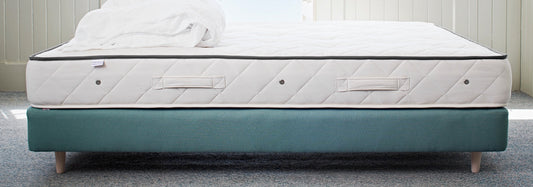
Rather than becoming a low-value by-product, the wool from our sheep continues its journey here in the South West, where it's transformed into beautiful mattresses that people will sleep on for many years to come. There's something deeply satisfying about knowing that a material grown on our farm remains part of a circular local economy instead of becoming waste.
Perhaps that's the thought I'd most like people to take away.
Whether it's the wool inside a Naturalmat mattress or the organic beef and lamb we prepare in our on-farm butchery, every product from Essebeare Farm begins in exactly the same place - with healthy soil, thriving pasture and a deep sense of responsibility for the landscape entrusted to our care.

Every fleece tells a story.
Every meal tells a story.
Everything begins with the soil.